
Photo: isol (CC BY-SA 3.0, resized)
Things to do at Zaanse Schans
Six working windmills on a river bank twenty minutes from Amsterdam, and the remains of what was once the most heavily industrialised landscape in the world.
- About 20 minutes ab Amsterdam
The most industrialised place on earth, once
It is worth knowing what you are looking at, because the postcard version — quaint Dutch windmills on a green bank — has it almost exactly backwards.
In the seventeenth and eighteenth centuries the banks of the Zaan carried something like six hundred industrial windmills, the densest concentration of machine power anywhere in the world before coal. They sawed timber for the ships that built the Dutch empire, crushed linseed for oil, ground pigment, mustard, tobacco and cocoa. This was a factory district. The green wooden houses were worker housing, and the paint on them was cheap because it was made two hundred metres away.
Almost all of it went. By 1900 steam had won, and the mills were pulled down for their timber. The dozen or so standing today at Zaanse Schans are survivors that were physically moved here, mostly between 1961 and 1974, from sites along the river where they would otherwise have been demolished.
What actually decides whether you enjoy it
Not the weather. The time you arrive.
Zaanse Schans is compact — you can walk the whole site in twenty minutes — and it receives well over a million visitors a year, most of them delivered by coach between mid-morning and mid-afternoon. At eleven o’clock in July the path along the riverside is a queue. At nine it is a village with a heron on the bank.
There is no trick to this beyond going early or going late. The site itself is open ground with no gate and no opening hour; it is the mills, the museum and the shops that keep hours. An hour before the businesses open is a perfectly good hour to be there, and it is the only way to photograph the row of mills without somebody else’s group in the frame.
Pairing it with something else
Because it is small and close, Zaanse Schans works badly as a whole day and very well as half of one. The obvious second half is the old fishing coast on the IJsselmeer — Volendam, Marken, Monnickendam — which is twenty-five minutes east and a completely different landscape: water, dykes and harbours rather than industry and timber.
If you would rather stay put, Zaandam town centre is five minutes away and worth a look for one strange thing: the Inntel hotel, a stack of about seventy Zaan house facades piled seventy metres into the air. It divides people sharply, which is the point of it.
Was Sie sehen sollten
-
De Kat, the working paint mill
The last windmill in the world still grinding pigment the way it was done in the seventeenth century — chalk, ochre and lapis crushed between stones the size of a car wheel. The paint is sold downstairs, and restorers of old Dutch paintings genuinely buy it.
Tipp vom Fahrer: If you only go inside one mill, make it this one. The others show you a mill; this one shows you a mill doing its job.
-
Het Jonge Schaap, the sawmill
A reconstruction, opened in 2007, of a paltrok sawmill demolished in 1942 — rebuilt from photographs and the original builder's drawings. Watching a windmill saw a tree trunk into planks explains the Dutch Golden Age faster than any museum caption.
Tipp vom Fahrer: Sawing does not run constantly. Ask at the door what is scheduled before you pay to go up.
-
The clog workshop
A free demonstration in which a block of poplar becomes a wooden shoe in about five minutes, on machines that copy a template the way a key-cutter does. Poplar because it splits slowly and gives you warning before it fails.
Tipp vom Fahrer: It is free and it takes ten minutes, so it survives a rainy hour better than almost anything else here.
-
The cheese farm
A working demonstration dairy with a tasting counter — dozens of Gouda varieties, cut into cubes, at no charge. The stroopwafel bakery a few doors along works on the same principle.
Tipp vom Fahrer: Tasting is genuinely free and nobody pushes you. Go before lunch rather than after.
-
The Zaans Museum and the Verkade pavilion
The one indoor exhibition that explains why any of this is here: the Zaan as the first industrial region in Europe, with a full Verkade biscuit and chocolate factory floor rebuilt inside, machines running.
Tipp vom Fahrer: This is where to go if it rains, and the pavilion is far better than the word "pavilion" suggests.
-
The far bank of the Zaan
Cross the Julianabrug and look back. From the village side you are standing among the windmills; from the other bank you see them as a row against the water, which is the picture everyone comes for and half of visitors never take.
Tipp vom Fahrer: Ten minutes there and back. Do it first, while the light is still low and the site behind you is empty.
Wo liegt das?
Tagesausflüge, die dorthin fahren
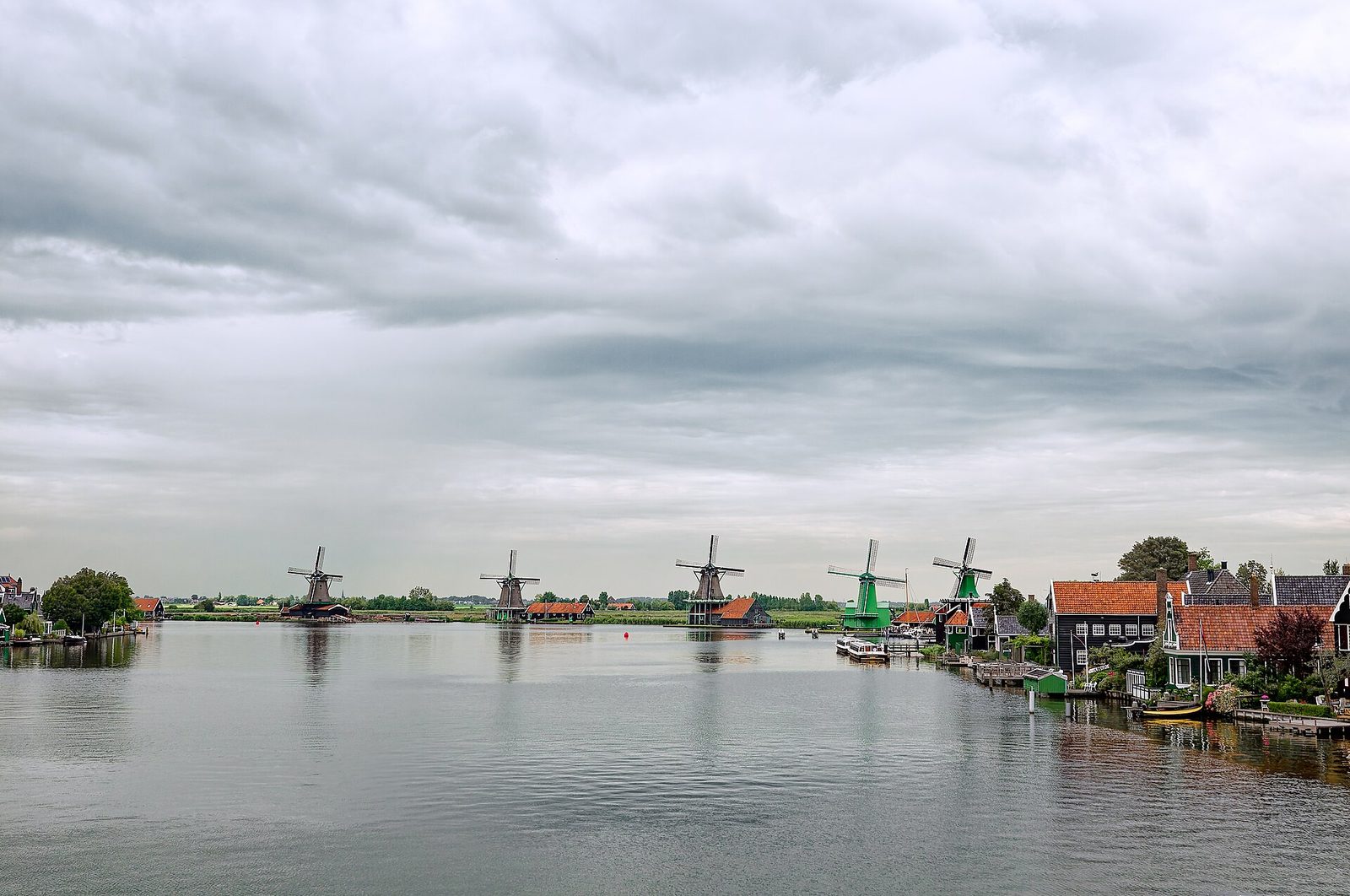
Zaanse Schans
Arbeitende Windmühlen, die Sie von innen ansehen können, eine Holzschuhwerkstatt und eine Käserei — zwanzig Minuten von Amsterdam. Ein kurzer, unkomplizierter halber Tag, der zu allen passt, auch zu Familien mit kleinen Kindern.
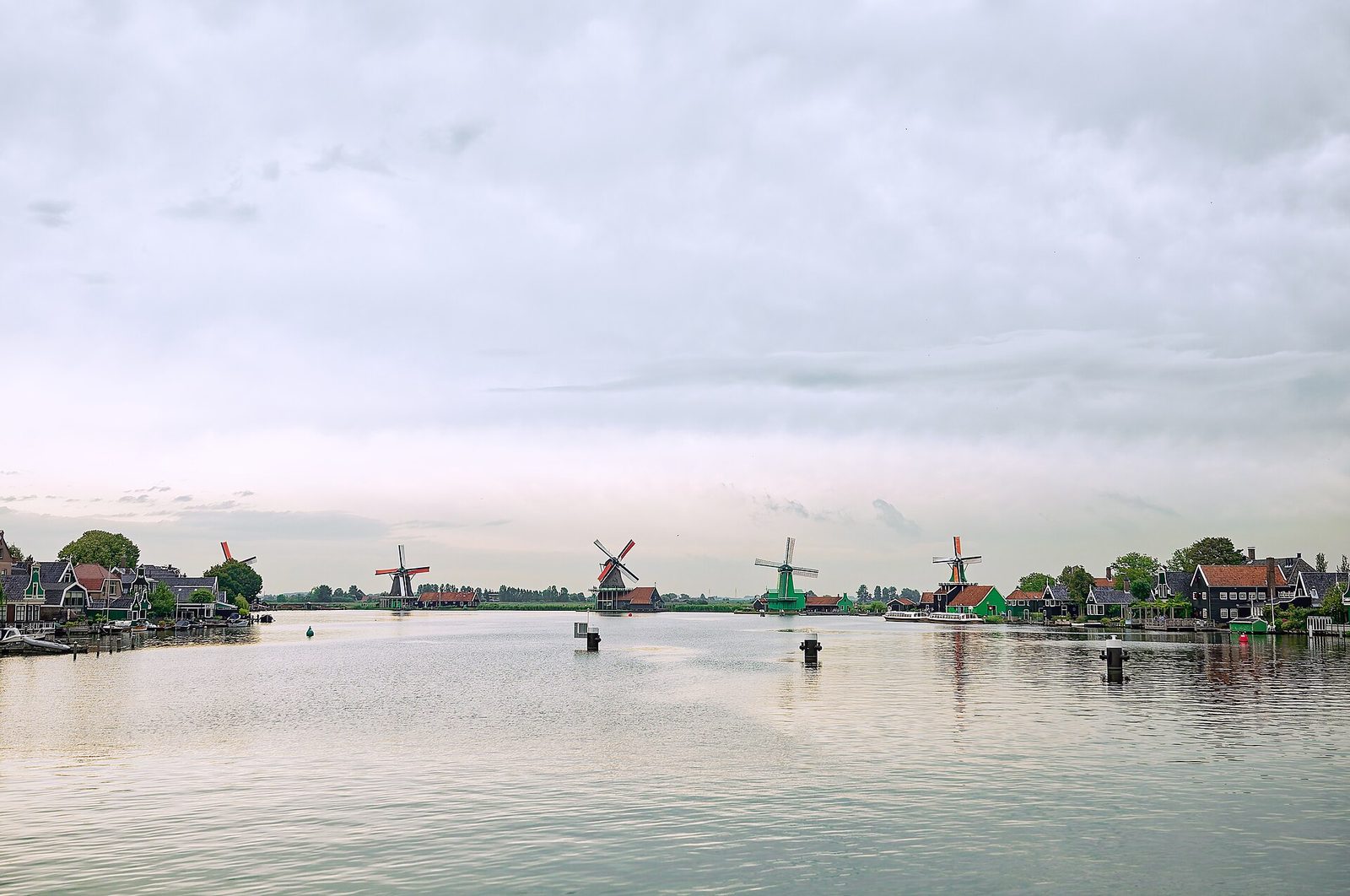
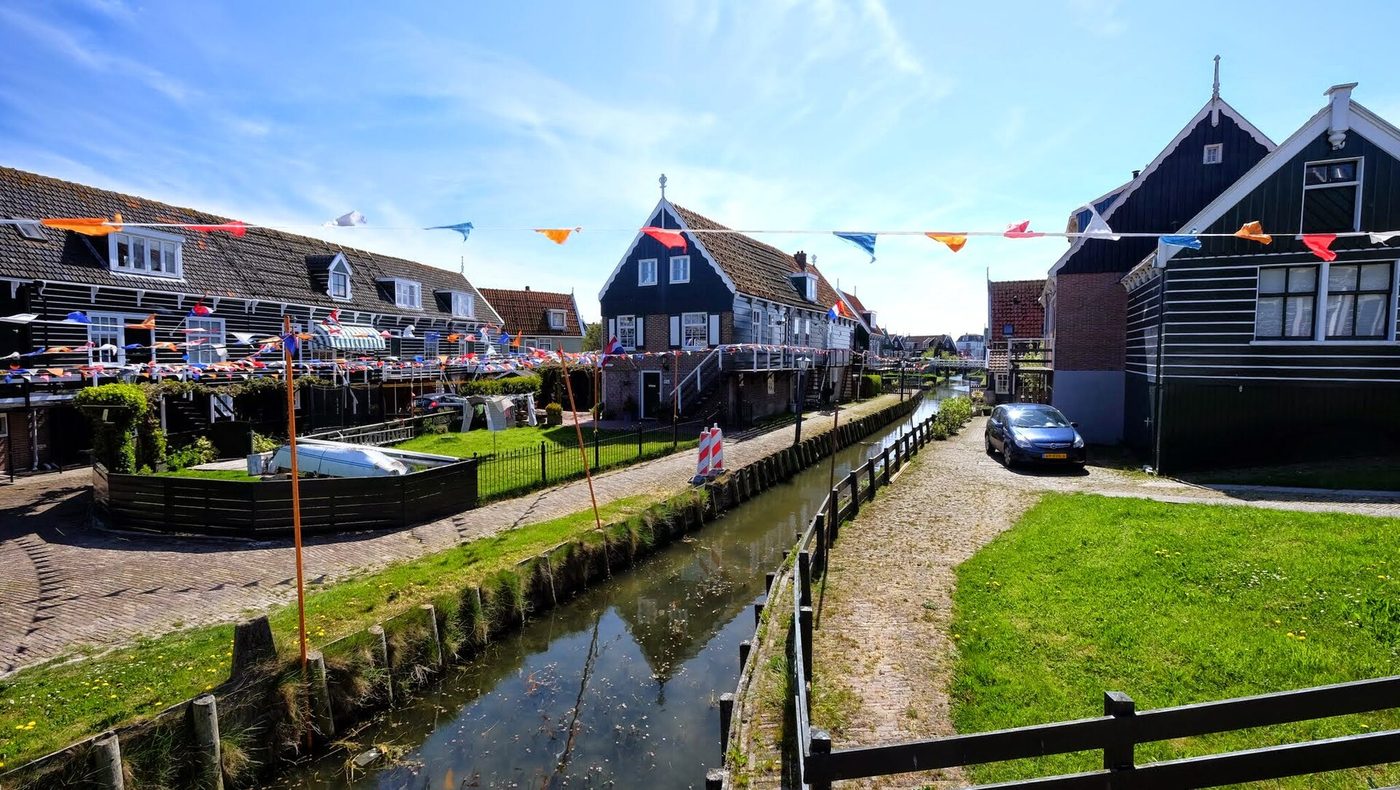
Windmühlen & Dörfer — drei Stopps
Unser meistgebuchter ganzer Tag. Arbeitende Windmühlen am Vormittag, Hering am Hafen zum Mittag und am Nachmittag das alte Inseldorf Marken — drei der bekanntesten Orte des Landes in einer entspannten Tour.
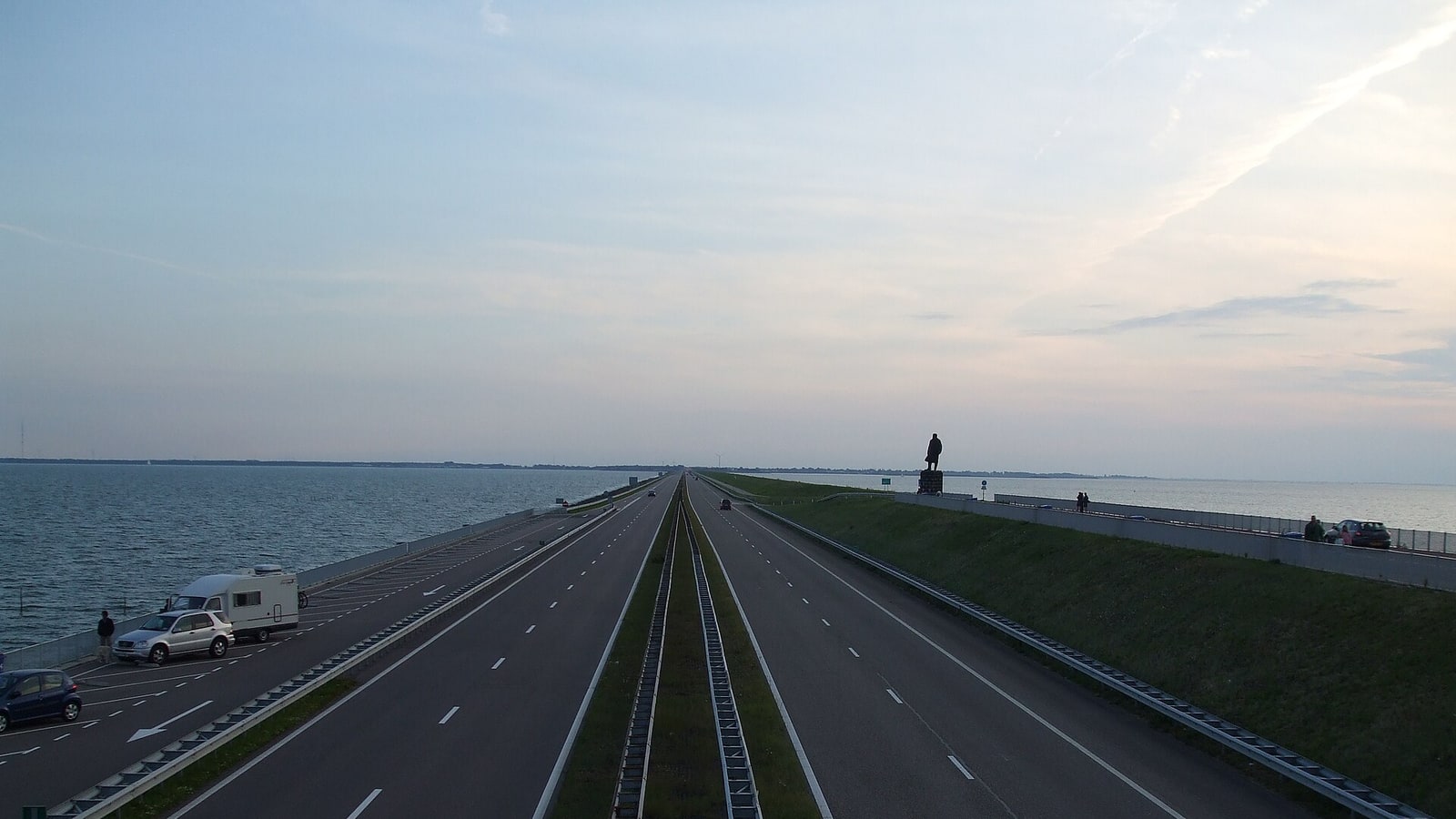
Windmühlen & Abschlussdeich
Die Windmühlen der Zaanse Schans am Vormittag, dann nach Norden auf den Abschlussdeich — den 32 Kilometer langen Afsluitdijk, der ein Meer in einen See verwandelt hat. Die älteste und die neueste niederländische Art, mit dem Wasser zu leben, an einem Tag von sieben Stunden.
Häufige Fragen
Is Zaanse Schans free?
Walking through the village and along the riverside costs nothing. The individual windmills, the Zaans Museum and some of the workshops charge separately, so what you spend depends entirely on how much you go inside.
Are the windmills original?
The mills are genuine seventeenth and eighteenth-century structures, but most were moved here between 1961 and 1974 from elsewhere in the Zaan region to save them from demolition. The site is a rescue, not a stage set — which is why they still work.
How long do you need at Zaanse Schans?
Two hours covers the village, the far bank and one mill. Half a day if you want the museum and more than one mill inside. It is small, and that is part of why it pairs well with somewhere else in the same day.
When is it least crowded?
Early. The coaches from Amsterdam start arriving mid-morning and the site is genuinely busy from about eleven until four. The first hour after opening is a different place.
Can you take us there from Amsterdam?
Yes — we run a private day to Zaanse Schans, and a longer day that adds the fishing villages on the IJsselmeer. Both are on this site with the price shown before you book anything.