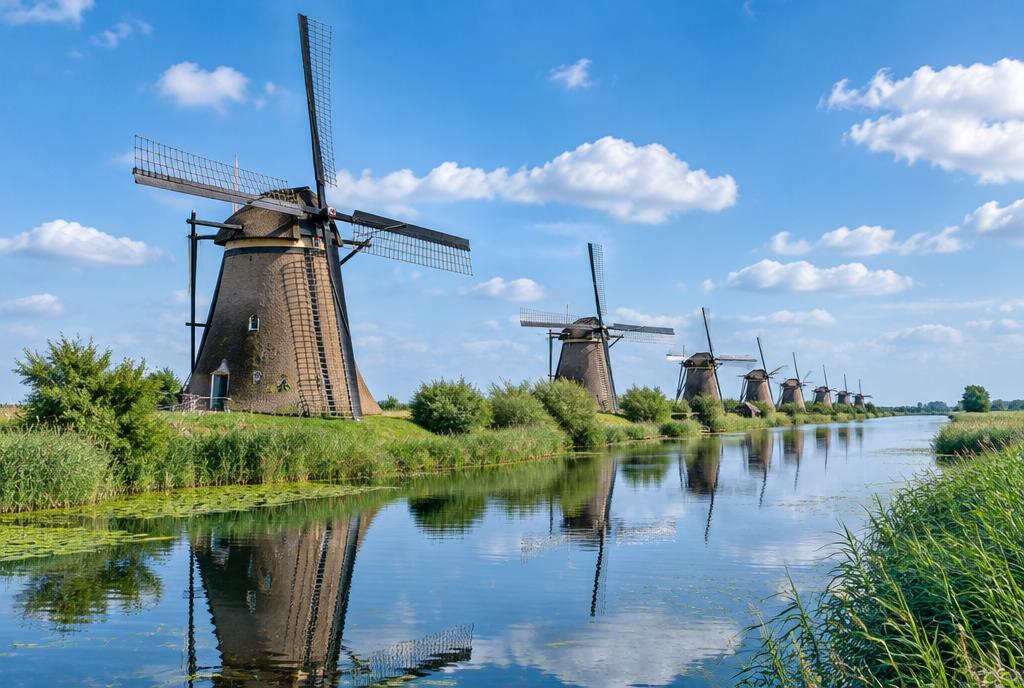
Things to do at Kinderdijk
Nineteen windmills along the polder dykes an hour from Amsterdam — mostly built around 1740 to keep a low valley dry, UNESCO-listed since 1997, and still home to the millers who look after them.
- About an hour from Amsterdam
A valley held dry
The Alblasserwaard is low land, and the water in it has to be lifted out before it can reach the river. The windmills did that in stages: one set raised it from the lowest ground into a reservoir, another set did the same for the higher polder, and when the Lek was low enough the reservoirs drained into it through locks. Eighteen of the nineteen mills date from the eighteenth century, most of them from around 1740; the odd one out is a timber mill from 1630. Together they are the largest group of old windmills in the Netherlands, and UNESCO has listed them since 1997.
Pumping stations took over the heavy work long ago, and the mills no longer carry the main load. They were not abandoned, though. Millers and their families still live in them and look after them, and some still work.
The name
Kinderdijk means “child dyke”. The story is that after the St Elizabeth’s flood of 1421 a wooden cradle washed up against the dyke here, with a baby asleep inside and a cat leaping from side to side to keep it from tipping over. Treat it as folklore. The flood was real, and it is the same one that made Dordrecht an island.
Planning a half day
Kinderdijk is a half-day place, not a day. The official site offers three versions of the visit: an hour for a quick look, two to three hours for the highlights, and a full day if you do everything. The museum mills, pumping station, film and boats are ticketed — card only, and cheaper online. From spring to autumn, cars are sent to a park-and-ride in Alblasserdam with a shuttle to the entrance, so allow time for that on top of the visit.
The path is flat, which suits children and grandparents alike, and dogs are welcome on a lead; the museum mills are the exception, with their narrow doors and steep stairs. Early or late in the day is quietest, and the middle of a summer afternoon is the opposite.
Rotterdam is about half an hour away and Dordrecht about twenty-five minutes, and either makes a natural second half to the day: Rotterdam for the new, Dordrecht for the old.
What to see
-
The Nederwaard mills
Eight brick-built mills from 1738 in the Nederwaard polder, one of the two main groups on the site. Their job was to lift water from the lowest ground of the Alblasserwaard into a reservoir, from which it ran into the river Lek whenever the river was low enough.
Driver’s tip: If turning sails are the point, come on a Windmill Day — the first Saturday of the month, in the afternoon, when the wind is strong enough, at least force 2 or 3 — and check the date on the official site first. On any other day, do not promise anyone they will turn.
-
The museum mills
Two mills are open as museums. The Nederwaard Museum Mill, from 1738, is a mill you can walk through, with a miller on hand to answer questions about life and work inside it. The Blokweer Museum Mill, from 1630, is the oldest of the nineteen, restored after a fire in 1997 and set up as life was in the 1950s.
Driver’s tip: The doorways are narrow and the stairs are steep. The official site says the museum mills are not wheelchair-accessible, and a pushchair will not manage them either. Go in early, and go all the way up to the bedrooms.
-
The pumping stations and the film
The Wisboom steam pumping station of 1868 was built to back up the mills; electric pumps replaced the steam in 1924 and, with a second station added in 1953, worked until 1996. It is now an exhibition where you can walk through the engine room. The introductory film is at De Fabriek, the second pumping station and the first stop on the official highlights route.
Driver’s tip: Start with the film and then the engine room, which is the order the site itself suggests. The mills make more sense once you know what the pumps were for — and that the pumping stations, not the mills, now do most of the work.
-
The boats
Two boats work the canals, both sailed by volunteers who tell the stories as they go. The Hopper is a scheduled service you can board and leave at several landing places; the Cruiser is a full circuit you cannot get off before the end, and runs from April to October.
Driver’s tip: Use the Hopper one way and walk the other, if it is running: you see the mills from the water first and close up from the dyke afterwards, and nobody covers the same stretch twice.
-
The dyke path, on foot or by bike
The mills are strung along the dykes and towpaths of the polder, and the going is flat. The official site offers three versions of the visit: about an hour for a short look, two to three hours for the highlights, and a full day if you do everything. The other main group is the eight thatched Overwaard mills, built around 1740.
Driver’s tip: Before ten or after three is when the path is quiet and the light is low; at midday in summer it is full. Bikes can be hired next to the entrance rather than inside it, and the site is cashless, so bring a card.
-
Windmill Day and Illumination Week
Two dates change what Kinderdijk is. On Windmill Day, the first Saturday of the month in the afternoon, the mills are set turning together, as they have been for demonstrations since 1956. In Illumination Week, in September, they are lit after dark.
Driver’s tip: Check the dates on the official calendar. For Illumination Week, plan your way back before you go: the daytime shuttles stop before the lights come on.
Where is it?
Day trips that go there
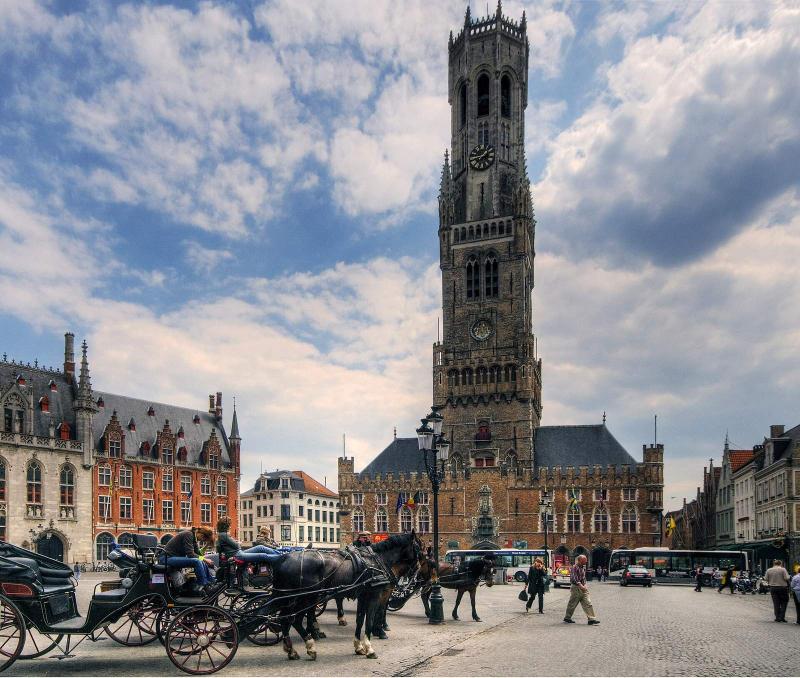
Bruges & Ghent
A medieval city that survived intact — canals, cobbles, a belfry you can climb and chocolate on every corner. Add Ghent on the way and see two of Belgium's finest cities in one day.
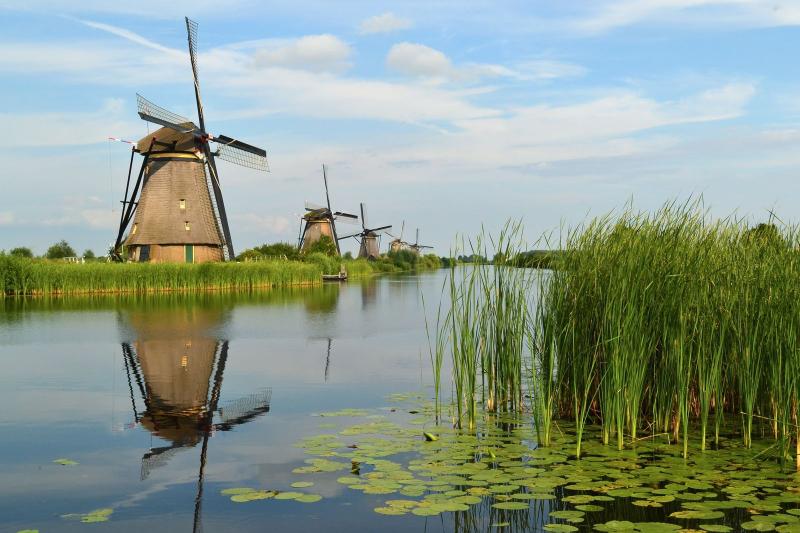
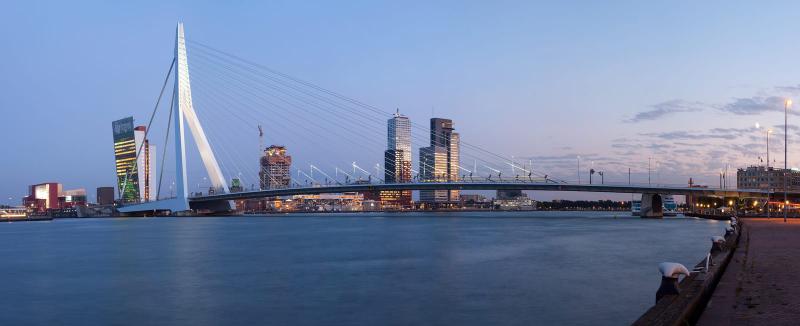
Shore excursions — Rotterdam
For cruise passengers docking in Rotterdam. We meet you at the terminal, spend the whole day wherever you choose — the windmills of Kinderdijk, Delft, The Hague, Gouda, the tulip fields — and have you back at the ship at least an hour before all-aboard.
Frequently asked questions
How long do I need at Kinderdijk?
It is a half day, not a day. The official site suggests an hour for a quick look, two to three hours for the highlights — the film, the Wisboom pumping station, a museum mill and a boat — and a full day only if you do everything. Tickets are card-only, and cheaper online than at the desk.
When do the windmills actually turn?
On Windmill Days: the first Saturday of the month, from about one o'clock to five, when there is enough wind — at least force 2 or 3. Those demonstrations have been held since 1956. On other days there is no promise, so do not plan a visit around it.
Is Kinderdijk close to Rotterdam or Dordrecht?
Yes — Rotterdam is about half an hour away and Dordrecht about twenty-five minutes, and both make a good second half to the day. Dordrecht is the oldest city in Holland; Rotterdam is the newest-looking.
Can you drive us to Kinderdijk?
Yes — we are based in Amsterdam, and Kinderdijk is an optional stop, included in the price, on our Bruges day trip. For a half day there, or paired with Rotterdam or Dordrecht, message us on WhatsApp and we will tell you the price before you commit to anything.